






































Fissure Sealant

View all Services
Why might I need this?
Different approaches
What is the process?
How could this help?
Frequently Asked Questions
Additional resources
An image showing fissure sealant being placed onto the fissure and grooves of a lower molar

About

Fissure Sealants

Fissure sealants are a simple and super effective way to protect your teeth from cavities, especially on your back teeth. They’re just a thin coating applied to your teeth—no needles, no drilling, and no pain involved. Kids and adults can both get them, and your dentist will let you know if they think sealants would be a good idea for you.

An image showing fissure sealant placed onto the fissure and grooves of lower molars
Icon of a sealant placed into a tooth

Why might I need

Fissure Sealants

?

Teeth naturally develop with grooves (known as fissures) on the surfaces of some of your teeth. Fissures are extremely variable - almost like a fingerprint on your teeth! For some people, fissures can be very deep or narrow which can cause food and plaque to become trapped. Deep fissures can be extremely hard to clean when brushing your teeth and could lead to cavities at these spots.

Rather than waiting for a cavity to form, your dentist can clean out the fissure and place a protective coating (or a fissure sealant) over the grooves of your teeth and prevent food and plaque becoming trapped at these sites. Research has shown that placing a sealant at these spots means the tooth is seven times less likely to develop a cavity which requires a filling!

An image showing fissure and grooves of lower molars that are decayed
An image showing fissure sealant into the fissure and grooves of lower molars

Different approaches to

Fissure Sealants

Fissure sealants differ slightly in very young children, to those done in older children and adults. Fissure sealants generally require the fissures to be cleaned thoroughly, as well as being kept extremely dry while the sealant material is setting.

For younger children

Keeping teeth clean and dry can be tricky! In these cases, we use a stickier, faster setting material for fissure sealants for kids. The only drawback is that this material is less permanent and tends to dissolve over time, but this can be replaced with a permanent fissure sealant as they grow up.

For older children and adults

We have specialised equipment to thoroughly clean the tooth, as well as keeping your lips, cheeks, tongue and saliva away from the tooth while the sealant is placed. This ensures your fissure sealants last as long as possible before requiring replacement.


What is involved for

Fissure Sealants

Fissure sealants are a common and very straightforward procedure, taking around 5 to 10 minutes to perform per tooth.

1

Assessment

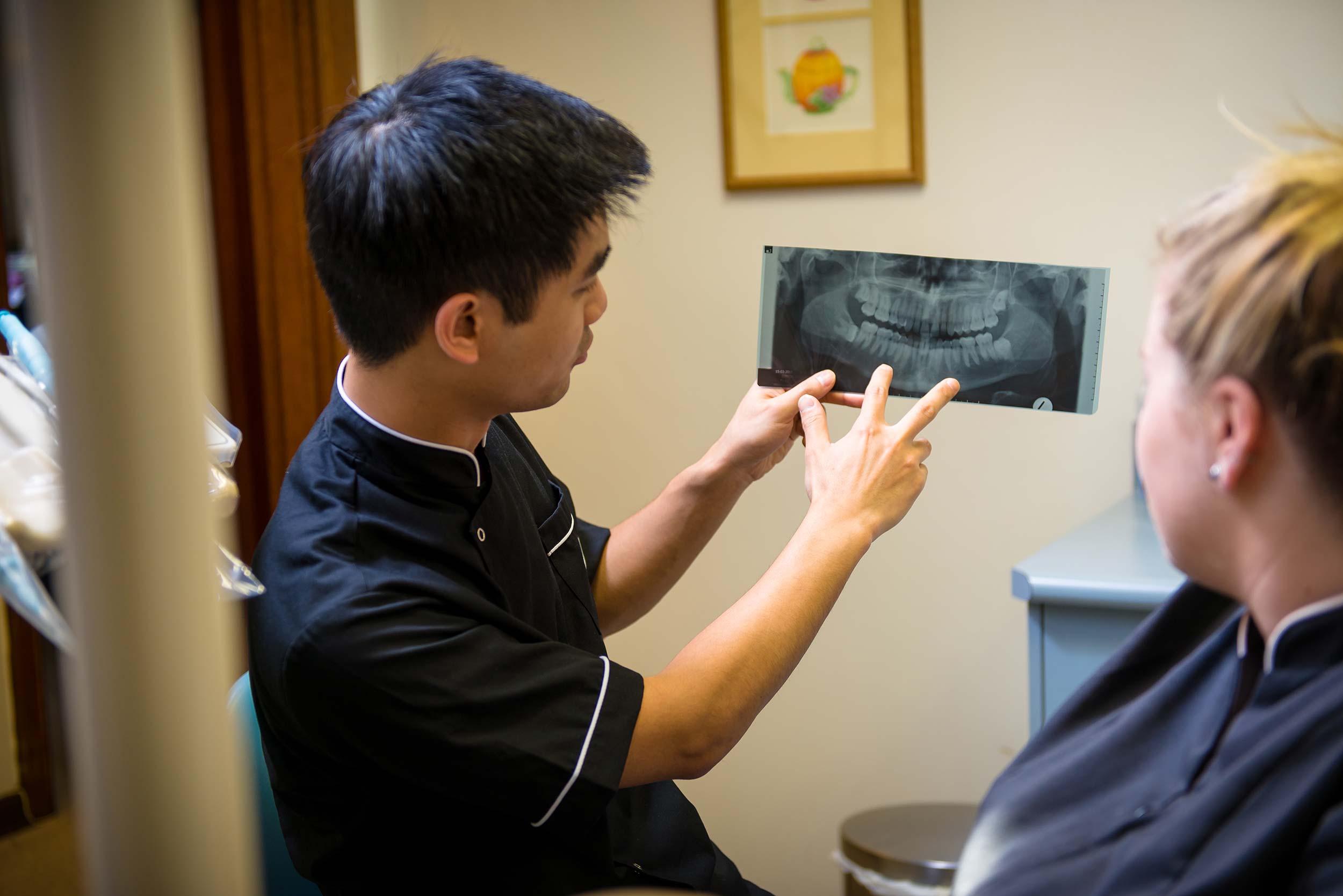
Your dentist will commonly visually inspect and clean out the fissure of your teeth, as well as sometimes taking x-rays of the tooth to confirm that a cavity has not started to form.

2

Isolate

If your tooth is cavity free, we isolate your tooth away from your cheeks, lips and tongue to keep the tooth surface clean and dry.

3

Clean and dry

The tooth is cleaned with special microabrasive powders and chemicals to create a clean surface for your fissure sealant to stick to.

4

Seal

A special adhesive is placed on the cleaned tooth surface before placing and setting the sealant with a special blue light.

Aftercare Information

If you've just had this treatment, or you're interested in learning more about the aftercare resources you'll receive following your treatment - click the button below to go through to more information on this important topic.

Read now
Cute little girl sitting in dentist's chair, brushing her teeth and showing thumbs up.

How could

Fissure Sealants

help me?

Fissure sealants help stop cavities by keeping food and plaque out of those hard-to-clean spots on your teeth. This is super important because once a cavity forms, you’ll need a filling—and fillings usually need to be replaced every 10 years or so. Each time a filling gets replaced, it gets bigger and can lead to more serious dental work down the road. So, preventing cavities with sealants is definitely the smarter move!

FAQ's about

Fissure Sealants

What should I do if I have a broken tooth?

Will I need to have my fissure seals replaced?

Are fissure seals the same as a filling?

Other
Resources

Book an Appointment

Open hours
Monday
8:00am - 5:00pm
Tuesday
8:30am - 7:30pm
Wednesday
9:00am - 5:00pm
Thursday
9:00am - 6:30pm
Friday
7:30am - 5:00pm
Saturday
8:00am - 1:00pm